Embedded fNIRS Acquisition System
An event-driven embedded Linux application coordinating Bluetooth, CAN, UART, timers, and a non-blocking sampling state machine.
This project is an embedded Linux acquisition application for a functional near-infrared spectroscopy (fNIRS) device. It coordinates Bluetooth control, CAN-connected measurement nodes, UART peripherals, and time-sensitive sampling without allowing one slow operation to stall the rest of the system.
The main engineering goal was to replace long, blocking workflows with an event-driven design whose ownership and timing are easier to reason about.
System flow
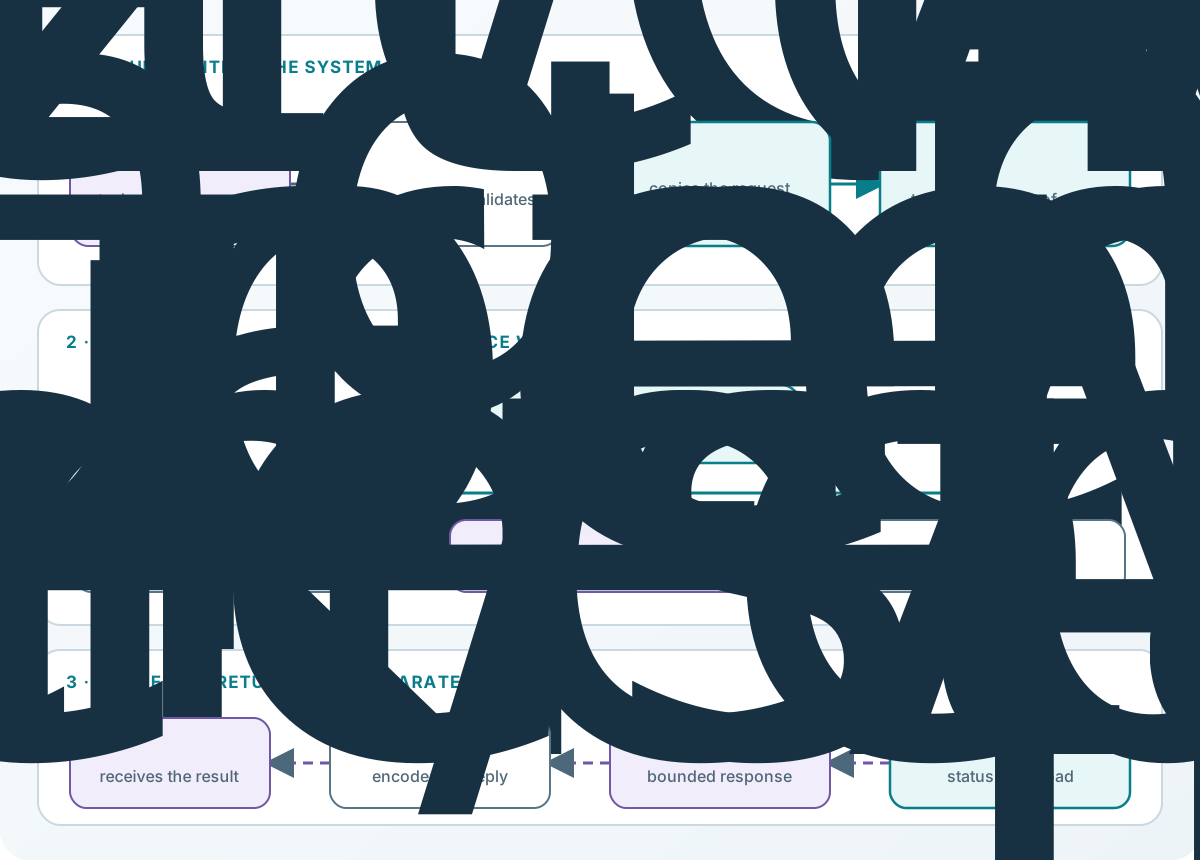
The Bluetooth and libevent runtimes operate in separate concurrency domains. The BlueZ GATT thread receives commands from a phone, but it does not directly modify acquisition state. Instead, it copies each request into a protected job queue and writes to an eventfd, waking the libevent loop.
The main thread owns the CAN, UART, sampling, and device business state. It processes the queued command and returns the result through a request-specific socketpair. This keeps shared state serialized while still giving the Bluetooth request a bounded response path.
Architecture
- Bluetooth control: BlueZ GATT receives configuration, discovery, and acquisition commands from a client.
- Cross-thread dispatch: a protected queue carries request data, while
eventfdtransfers readiness to the event loop. - Main event loop: libevent monitors CAN, UART, timers, and queued work on one state-owning thread.
- Sampling state machine: multi-step acquisition advances on timer ticks and CAN responses instead of blocking with sleeps.
- Response channel: a per-request
socketpairreturns status and payload to the GATT thread with a timeout.
Engineering outcomes
- Established one clear owner for acquisition and device state.
- Kept callbacks short so CAN, UART, Bluetooth, and timer events remain responsive.
- Represented hardware delays as state plus deadlines rather than blocking sleeps.
- Added bounded waiting and explicit failure handling across the thread boundary.
- Diagnosed an event-loop starvation case in CAN node discovery and restored discovery of all 12 connected nodes.
Technologies
Embedded Linux · C · libevent · BlueZ · CAN · UART · eventfd · socketpair · POSIX threads